
Short-Form Video Trends
Media Literacy
Short-Form Video Trends: A Family Media Guide
A practical guide to help children pause, question viral trends, and make safer choices before liking, sharing, or joining in.

Short-form videos can teach a dance, game strategy, science trick, or joke in seconds. They can also blend entertainment, advertising, and pressure into one fast post. Children do not need to distrust every creator. They need a calm habit of noticing what a video is asking them to do next.
Why fast video feeds feel different
A short video can be funny, useful, surprising, or all three. Its speed is part of the appeal: the next clip arrives before we have fully thought about the last one. That can make it easier to react quickly to a big claim, a giveaway, a “secret code,” or a challenge without stopping to ask where it came from.
For parents and educators, the goal is not to turn every scroll into a lesson. It is to give children a small pause routine they can use without needing to become experts in advertising, algorithms, or online misinformation.
Try the pause before the tap routine
When a post asks a child to click, comment, join a group, download something, or move to another app, invite them to pause for four questions:
• Who made this?
• What do they want me to do?
• Is there a link, giveaway, code, or time pressure?
• Could I check with a trusted grown-up before I tap?
These questions work for videos, group chats, game content, and posts shared by friends. They make room for curiosity while protecting a child from acting on urgency alone.
Explain ‘secret code’ marketing plainly
A comment such as “type this code for free items” can be an ordinary promotion, a way to increase engagement, or a route to a misleading link. A child does not need to work out which one it is before taking a safe step. The simple rule is that passwords, one-time login codes, payment details, and personal information do not belong in response to an online reward.
You can say: “A real reward does not need your secret login information.” It is short, memorable, and helps a child distinguish a fun game code from a private account code.
Practise with harmless examples
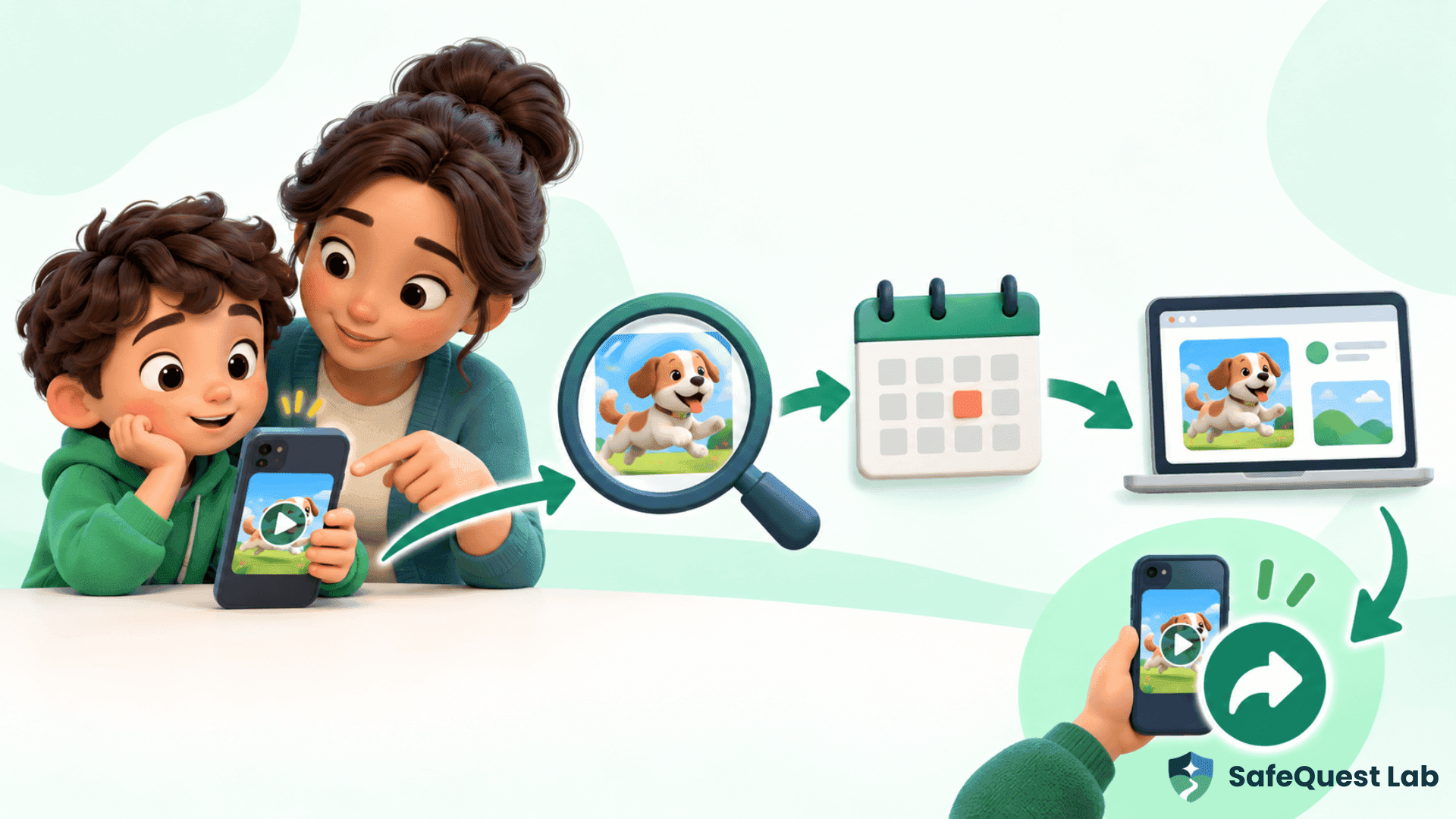
Pick a light-hearted post together and ask what it contains: a fact, an opinion, an advertisement, a joke, a challenge, or an invitation. Sometimes the answer is “a mix.” That is a thoughtful media-literacy observation. The child is learning to notice purpose, not to assume every video is untrue.
Then ask what they would do if the same post promised a prize, asked them to leave the app, or said they had to act now. The best answer can be simple: pause and show a grown-up.
Separate popularity from trust
A large view count, lots of comments, a familiar song, or a confident creator can make a post feel reliable. None of those signals proves that a claim is accurate or that a link is safe. Teach children that popularity tells us something is being watched; it does not tell us whether it has been checked.
This is a useful distinction for schoolwork too. If a video makes a surprising claim, look for an independent trusted source rather than another video repeating the same statement. A library, school, well-known news organisation, official organisation, or a teacher may be a better second stop depending on the claim.
Keep the response calm if they clicked
Children may already have clicked a strange link, joined a group, or typed a comment before they realise it felt off. The priority is that they tell an adult quickly—not that they feel embarrassed. Start with, “Thank you for showing me,” then decide together what to do next. You may need to close a page, report something in the app, or review an account setting. Avoid making disclosure feel like a punishment; otherwise a child may hide the next concern.
A simple family agreement
Families can agree on a few defaults that make quick decisions easier:
We pause before links, downloads, giveaways, and off-platform invitations.
We do not share passwords, private details, or verification codes for a prize.
We can ask an adult without getting in trouble for asking.
We check big claims before we repeat them.
These are not rules against fun. They are small tools that protect a child’s attention, account, and privacy while leaving room to enjoy creative content.
The bigger skill
The long-term goal is not perfect scepticism. It is thoughtful participation. Children can enjoy a trend, laugh at a joke, learn a skill, and still pause when a post tries to rush them into an action. That balance builds confidence more effectively than fear.
Family takeaway
A short pause turns a fast feed into a chance to think. Help children notice the claim, the pressure, and the next action before they tap or share. When in doubt, a trusted adult can be part of the decision.
Next step: Explore more calm, family-friendly digital-safety guidance in the SafeQuest Journal.